

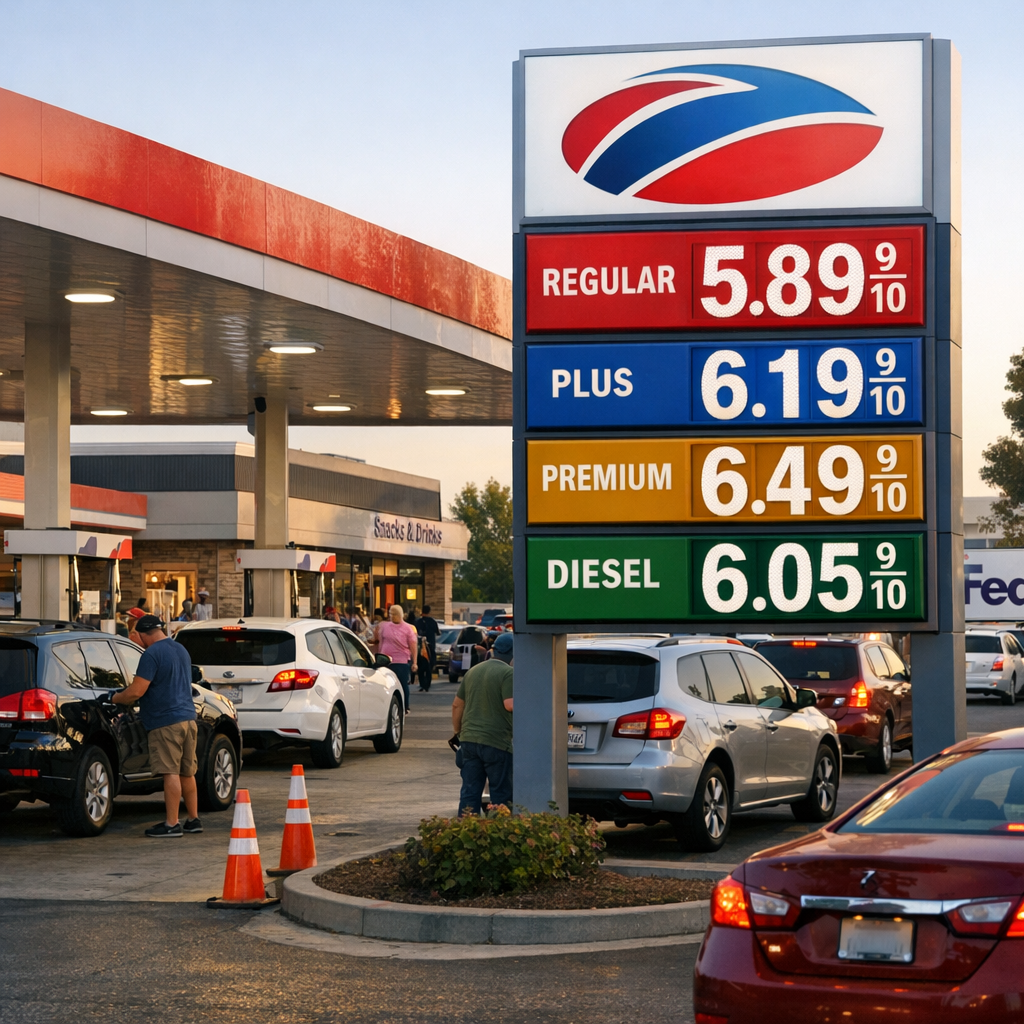
In recent months, American consumers have faced a significant increase in gasoline prices, with the national average surpassing $4.50 per gallon. This surge has been particularly pronounced in certain states, where prices have exceeded $5 per gallon. The escalation in fuel costs is largely attributed to geopolitical tensions and disruptions in global energy markets.
Economic Implications
The rise in gas prices has a cascading effect on the economy. Higher transportation costs lead to increased prices for goods and services, contributing to overall inflation. The International Monetary Fund (IMF) has noted that while the U.S. economy remains buoyant, these rising costs pose potential risks. The IMF projects a growth rate of 2.4% for the U.S. economy in the fourth quarter of 2026, up from 2.2% the previous year. However, it warns that escalating federal budget debts and trade tensions could undermine this growth trajectory.
Consumer Sentiment
Public dissatisfaction with current economic policies is evident. A recent CBS News/YouGov poll indicates that 70% of Americans feel “angry” or “frustrated” about the administration’s handling of the economy. Only 11% expressed enthusiasm, and 19% reported satisfaction. This sentiment reflects concerns over rising living costs and economic uncertainty.
Local Impact
For residents of Blaine, Minnesota, the increase in gas prices translates to higher commuting expenses and elevated costs for goods and services. Local businesses may also experience increased operational costs, potentially leading to higher prices for consumers. Community members are encouraged to explore fuel-saving strategies, such as carpooling, using public transportation, or adopting more fuel-efficient vehicles, to mitigate the impact of rising fuel costs.
Understanding the factors contributing to rising gas prices and their broader economic implications is crucial for making informed decisions and advocating for policies that address these challenges.