

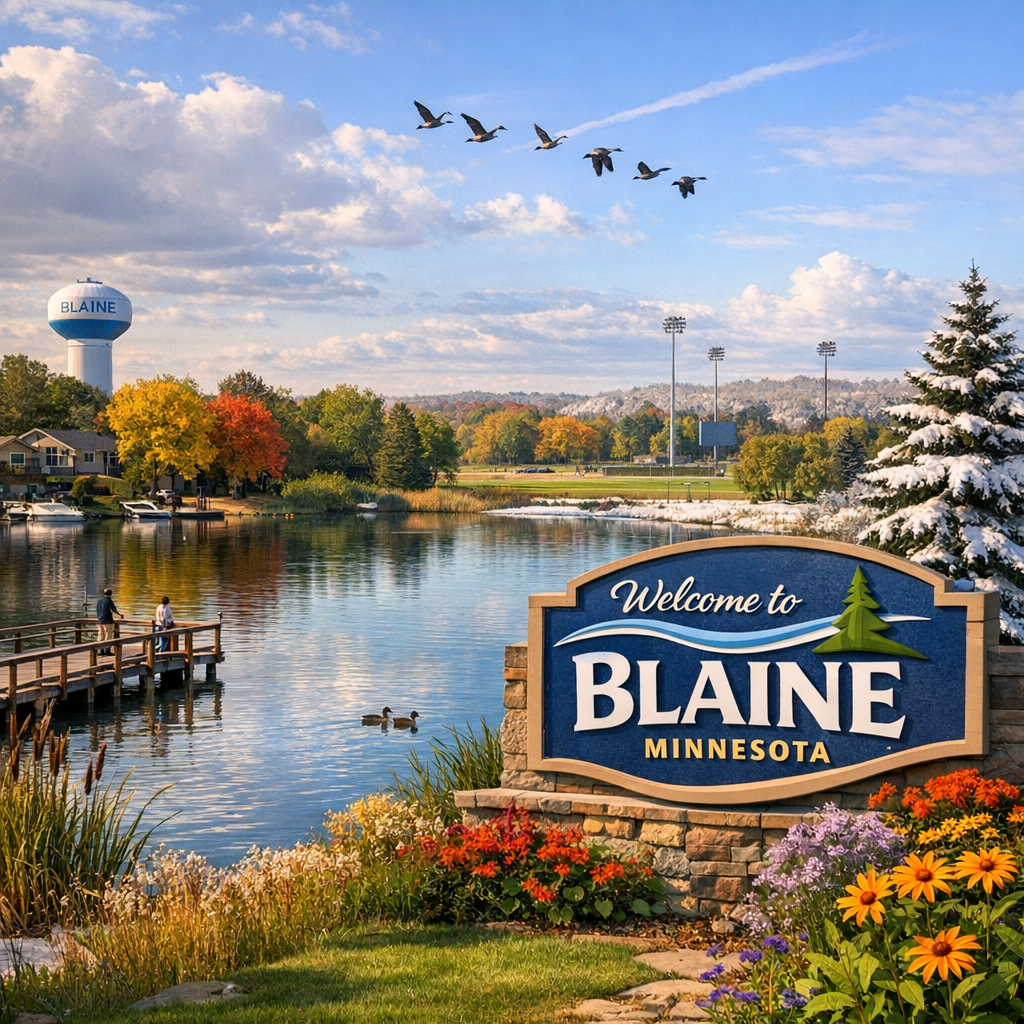
Blaine, Minnesota, experiences a humid continental climate characterized by distinct seasons, each offering unique weather patterns and environmental considerations.
Seasonal Climate Overview
In Blaine, residents enjoy four distinct seasons:
- Winter: Spanning from late November to early March, winters are cold and snowy, with average low temperatures around 9°F (-13°C) and highs near 23°F (-5°C). Snowfall is common, contributing to the region’s winter landscape.
- Spring: March through May brings a gradual warming trend. Average highs increase from 41°F (5°C) in March to 68°F (20°C) in May. This season also sees increased rainfall, aiding in the blooming of local flora.
- Summer: June to August features warm and humid conditions, with average highs peaking at 82°F (28°C) in July. These months are ideal for outdoor activities, thanks to extended daylight hours and generally pleasant weather.
- Autumn: September through November offers a cool and crisp atmosphere. Temperatures gradually decrease, with November highs averaging around 42°F (6°C). The fall foliage provides a picturesque setting throughout the city.
Environmental Management Efforts
Blaine is proactive in managing its environmental resources, particularly concerning water quality and stormwater management.
Stormwater Management
As urban development increases, impervious surfaces like roads and rooftops prevent natural water infiltration, leading to stormwater runoff. Blaine’s Stormwater Management program aims to improve water quality and reduce runoff by implementing systems that direct stormwater into drains and ditches, eventually reaching the Mississippi River. This initiative helps mitigate flooding and prevents pollutants from entering natural water bodies.
Wetlands and Buffers
The city emphasizes the preservation of wetlands and the establishment of buffer zones. These areas are crucial for maintaining biodiversity, controlling floods, and filtering pollutants. Residents are encouraged to consult with city officials before altering landscapes that may include wetlands or designated buffer zones to ensure compliance with environmental regulations.
Low Impact Development (LID)
Blaine promotes Low Impact Development practices to manage stormwater at its source. Techniques such as rain gardens, green roofs, and pervious pavements are encouraged to infiltrate, filter, and store runoff, reducing the burden on traditional stormwater systems and enhancing groundwater recharge.
Water Quality Initiatives
Ensuring safe and clean drinking water is a priority for Blaine. The city has invested in water treatment plants equipped with advanced filtration systems to address contaminants like iron and manganese. Additionally, efforts are ongoing to monitor and manage water supply wells to prevent issues such as those experienced in 2022, where unpermitted well operations led to domestic well interferences.
By understanding Blaine’s climate and supporting the city’s environmental initiatives, residents can contribute to a sustainable and resilient community.