

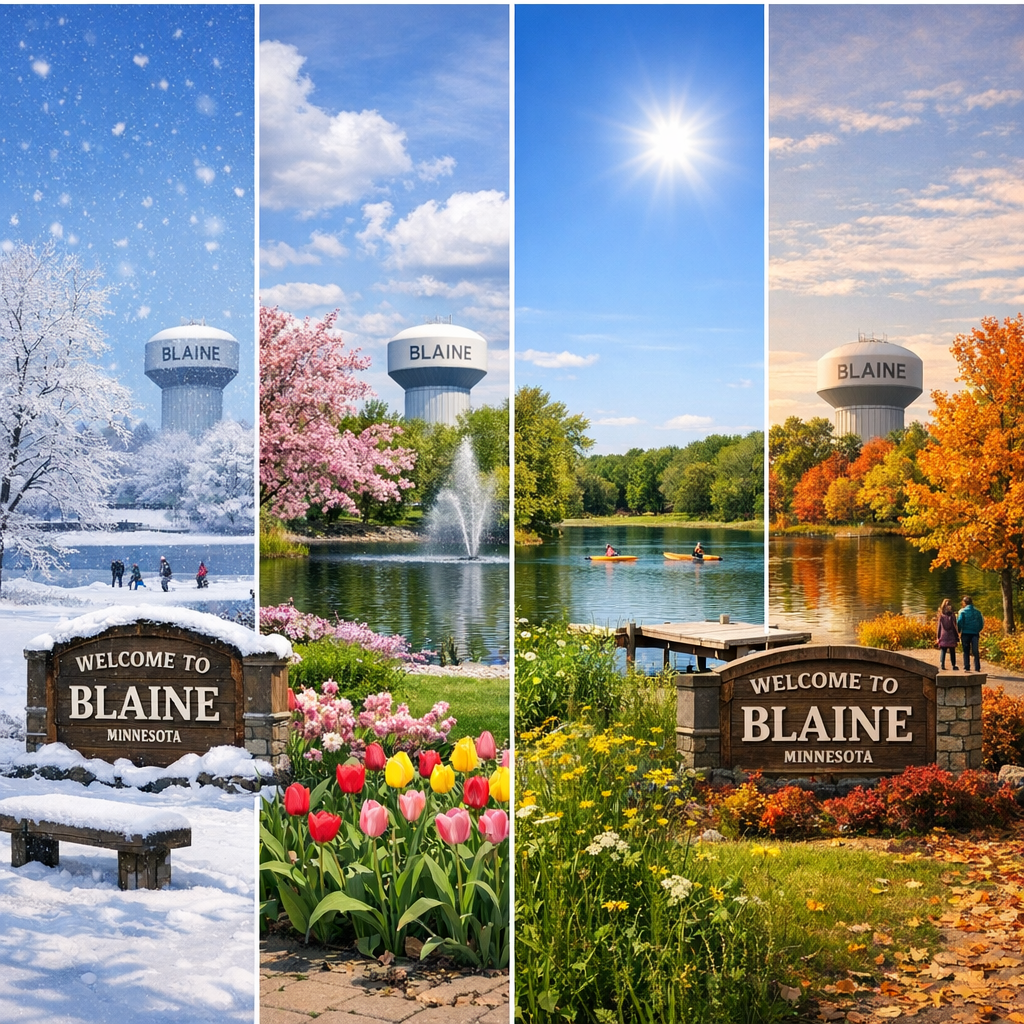
Blaine, Minnesota, experiences a classic humid continental climate, characterized by four distinct seasons: warm summers, cold winters, and transitional periods in spring and fall. Understanding these seasonal patterns can help residents and visitors prepare for the varying weather conditions throughout the year.
Winter: December to February
Winters in Blaine are typically cold and snowy. Average high temperatures range from 23.1°F (-5.0°C) in January to 28.5°F (-1.9°C) in December, with lows often dipping into the single digits. Snowfall is common, contributing to the city’s winter landscape. Residents should be prepared for freezing temperatures and ensure their homes and vehicles are winter-ready.
Spring: March to May
Spring brings a gradual warming trend. March sees average highs around 41.0°F (5.0°C), increasing to 68.3°F (20.2°C) by May. This season also experiences increased precipitation, with May averaging 4.45 inches (113 mm) of rainfall. The melting snow and spring rains can lead to wet conditions, so waterproof footwear and rain gear are advisable.
Summer: June to August
Summers are warm and humid, with average highs peaking at 82.5°F (28.1°C) in July. June and August are slightly cooler, with highs around 77.7°F (25.4°C) and 80.0°F (26.7°C), respectively. These months also see the highest rainfall, averaging around 4.71 inches (120 mm) in June. It’s essential to stay hydrated and use sun protection during outdoor activities.
Fall: September to November
Fall is marked by cooling temperatures and vibrant foliage. September starts with average highs of 72.5°F (22.5°C), dropping to 42.1°F (5.6°C) by November. Rainfall decreases during this period, with November averaging 1.67 inches (42 mm). Layered clothing is recommended to adapt to the fluctuating temperatures.
Being aware of Blaine’s seasonal climate patterns allows residents and visitors to plan accordingly, ensuring comfort and safety throughout the year.