

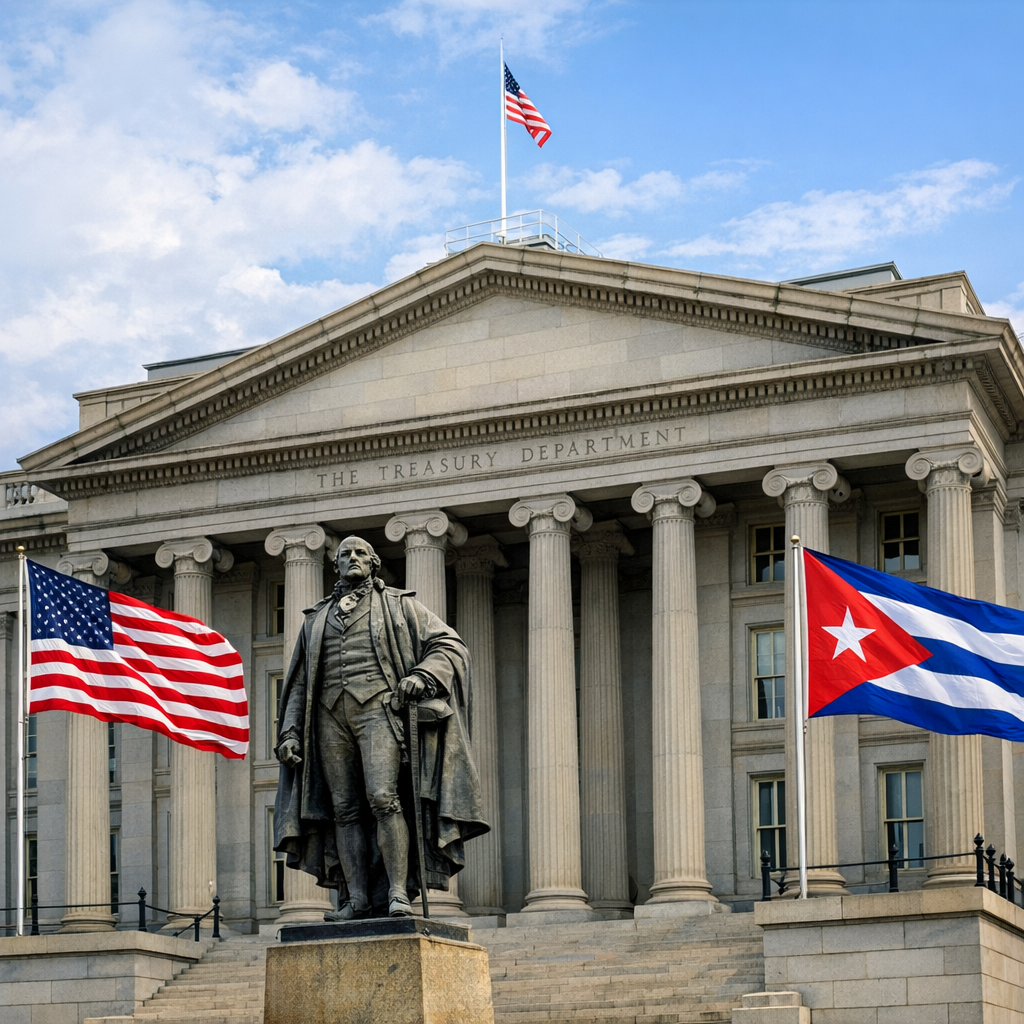
The U.S. Treasury Department has announced sanctions targeting prominent Cuban officials and the nation’s intelligence agency. This move aims to address concerns over human rights violations and the suppression of political dissent in Cuba.
Details of the Sanctions
The sanctions specifically target the head of Cuba’s National Assembly, along with several ministers and generals. Additionally, the country’s intelligence agency, known as the Dirección General de Inteligencia (DGI) or G2, has been blacklisted. These measures are intended to restrict the financial activities of the sanctioned individuals and entities, limiting their access to international markets and resources.
Implications for U.S.-Cuba Relations
These sanctions are likely to further strain the already tense relationship between the United States and Cuba. While the U.S. government cites human rights concerns as the primary reason for these actions, Cuban officials have historically viewed such measures as unwarranted interference in their internal affairs. The effectiveness of these sanctions in prompting policy changes within Cuba remains to be seen.
Local Perspective
For residents of Blaine, Minnesota, and the broader U.S. community, these developments may seem distant. However, they underscore the U.S. government’s ongoing commitment to addressing human rights issues globally. Additionally, such international actions can have ripple effects, influencing U.S. foreign policy and potentially impacting economic and diplomatic relations with other nations.