

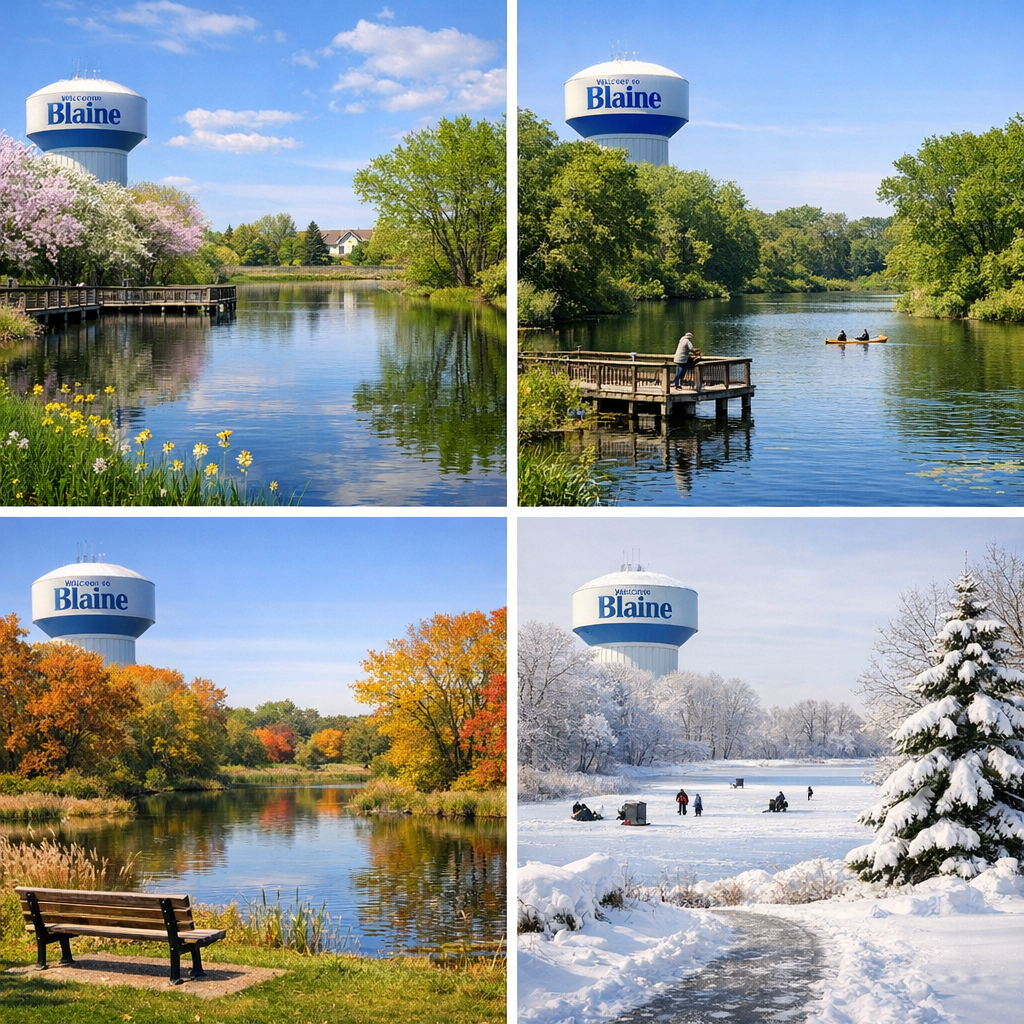
Blaine, Minnesota, experiences a humid continental climate, characterized by four distinct seasons with significant temperature variations and consistent precipitation throughout the year.
Seasonal Overview
Winter
Winters in Blaine are cold and snowy. Average low temperatures in January hover around 6.5°F (-14°C), with highs reaching approximately 23.1°F (-5°C). Snowfall is common, contributing to the city’s winter landscape.
Spring
Spring brings a gradual warming trend. By April, average highs reach 55.4°F (13°C), and lows are around 34.6°F (1°C). This season also sees an increase in precipitation, averaging 3.05 inches (77 mm) in April.
Summer
Summers are warm and humid. July, the warmest month, has average highs of 82.5°F (28°C) and lows around 62.7°F (17°C). Rainfall is relatively consistent, with June averaging 4.71 inches (120 mm).
Autumn
Autumn features cooling temperatures and vibrant foliage. October sees average highs of 57.8°F (14°C) and lows of 38.6°F (3°C). Precipitation decreases slightly compared to summer months.
Precipitation Trends
Blaine receives an average annual precipitation of 33.09 inches (841 mm), with rainfall fairly evenly distributed throughout the year. August is typically the wettest month, averaging 4.70 inches (119 mm) of rainfall.
Climate Considerations
Understanding these patterns is essential for residents and visitors to prepare for seasonal activities and weather-related events. Whether it’s dressing warmly for winter, planning outdoor activities in summer, or managing stormwater runoff during heavy rains, being informed about Blaine’s climate enhances the experience of living in or visiting the area.